How to Unclog a Toilet: Step-by-Step Guide for Homeowners
Why a Clogged Toilet Feels Like a Race Against Time
It always seems to happen at the worst moment. You flush, expecting the usual swirl, but instead the water rises—threatening to spill over. Panic sets in. We’ve all been there. At Julius La Rosa Plumbing, we understand how stressful this can be. That’s why we’re sharing practical steps you can use today—before things get messy.
Knowing how to unclog a toilet safely can save your bathroom, your nerves, and maybe even your weekend. Let’s walk through what causes clogs, what works (and what doesn’t), and when it’s time to call in a professional.
Common Causes of Toilet Clogs 🚽
Toilets are sturdy, but they’re not invincible. Most blockages come down to a few usual suspects:
- Too much toilet paper: Even the “flushable” kind can cause trouble if used in excess.
- Non-flushable items: Wipes, paper towels, cotton swabs, and children’s toys are common culprits.
- Low-flow toilets: Older or water-saving models can sometimes lack the force needed for a strong flush.
- Hard water buildup: Over time, mineral deposits can narrow pipes and slow drainage.
- Recurring plumbing issues: Sometimes, a clog is a symptom of a bigger problem—like a partial sewer line blockage.
If you live with kids, keep an eye out for small toys or even toothbrushes making their way into the bowl. It happens more often than you’d think.
Quick Safety Checklist Before You Start
Before reaching for the plunger, pause for a moment. Safety first:
- Put on gloves. Toilets are full of germs.
- Ventilate the area. Open a window or turn on the fan.
- Lay down towels. Protect your floor from splashes.
- Never mix cleaning chemicals. Ammonia and bleach together can create dangerous fumes.
- Have a bucket nearby. Just in case you need to bail out excess water.
A little preparation can save a lot of cleanup later.
Essential Tools for Unclogging a Toilet
You don’t need a toolbox the size of a car trunk. For most household clogs, these basics will do:
- Plunger: A flange or bell-shaped plunger works best for toilets.
- Toilet auger (plumber’s snake): For stubborn or deep clogs.
- Rubber gloves: Protect your hands.
- Bucket and old towels: For any overflow.
- Disinfectant: Clean up after the job is done.
Think of these as your “first aid kit” for bathroom emergencies.
Step-by-Step: How to Unclog a Toilet
Ready to tackle the clog? Follow these steps:
1. Stop the Overflow
If the water is rising, quickly remove the tank lid and push the flapper down to stop more water from entering the bowl. Turn off the water supply valve (usually behind the toilet) if needed.
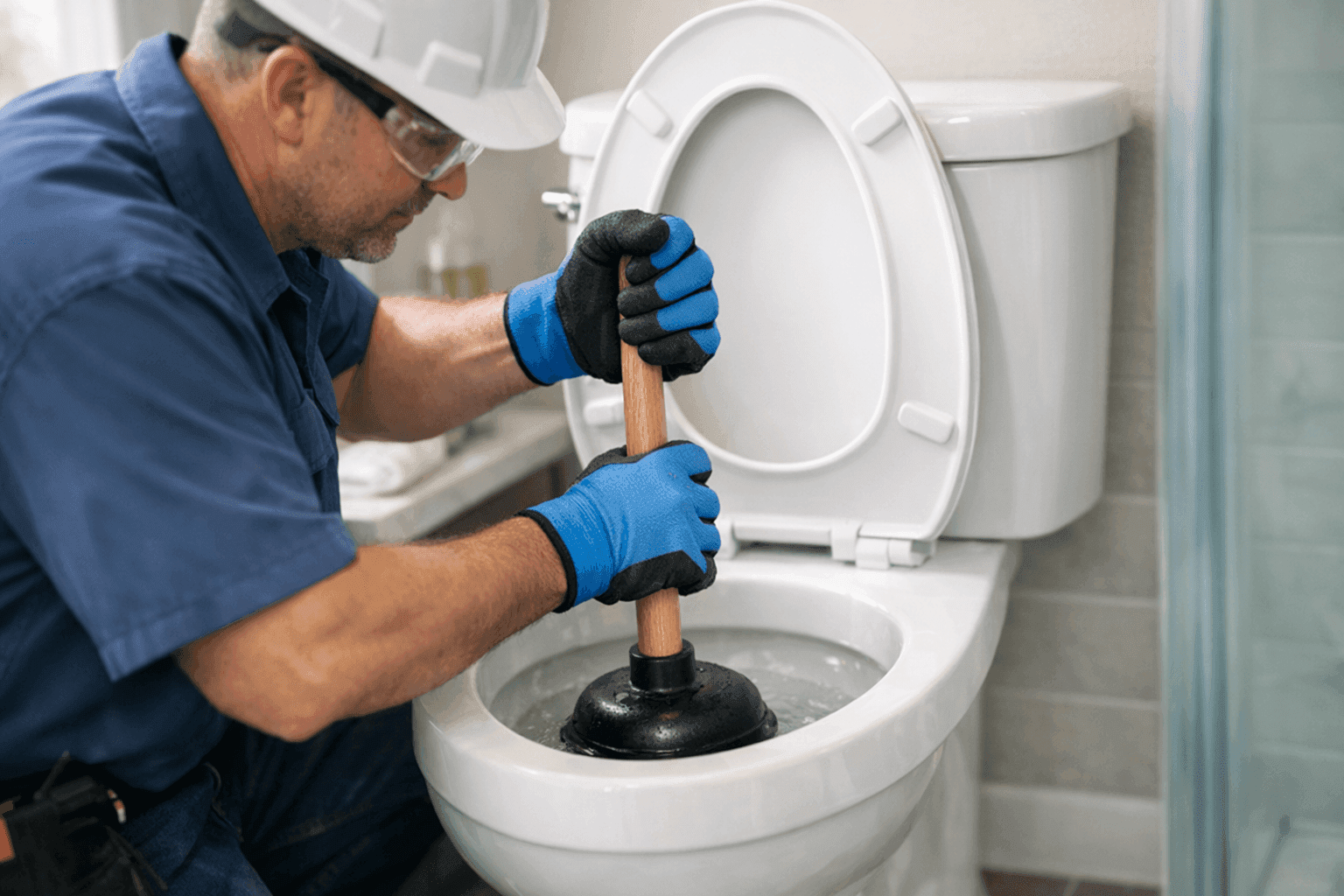
2. Grab the Plunger
- Place the plunger in the bowl, making sure it covers the hole completely.
- Push down gently at first to get a good seal.
- Then use firm, quick thrusts—about 10–15 times.
- Pull the plunger up sharply. The suction can help dislodge the blockage.
- Repeat as needed, checking if the water drains.
3. Try a Toilet Auger
If plunging doesn’t work:
- Insert the auger’s tip into the bowl and crank the handle gently.
- Feed the cable into the drain until you feel resistance.
- Rotate and push to break up the clog, then pull the cable out slowly.
- Flush to test.
4. Clean Up
Wipe down all surfaces with disinfectant. Wash your hands thoroughly, even if you wore gloves.
For more complex blockages or frequent issues, you may benefit from our unclogging toilets service for a thorough solution.
What to Avoid: Don’t Make It Worse
It’s tempting to reach for a chemical drain cleaner—don’t. Harsh chemicals can damage your pipes and create toxic fumes, especially in small bathrooms.
Skip wire hangers or makeshift tools. They can scratch the porcelain or push the clog deeper. And never keep flushing in hopes that the problem will fix itself. You might end up with a much bigger mess.
When It’s More Than a Clog: Signs of Bigger Trouble
Sometimes, a stubborn toilet is a sign that something else is wrong:
- Multiple fixtures clogged: If sinks or tubs are backing up too, it could be a main line issue.
- Slow drains throughout the house: This points to a larger blockage.
- Gurgling noises: Air in the pipes may mean a venting problem or partial sewer blockage.
- Water on the floor: Leaks around the base or from the tank need attention.
If you notice any of these, it’s time to look beyond DIY.
Tips for Preventing Future Clogs
An ounce of prevention is worth a pound of plunging. Here’s how to keep things flowing:
- Teach kids what not to flush. Keep a small trash bin nearby for wipes and other items.
- Use less toilet paper. Remind everyone in the household.
- Regularly check for slow drains. Early intervention can stop a clog before it starts.
- Schedule routine plumbing inspections. Especially if you live in an older home.
Advice for Homes with Children
Kids are curious. Toilets are fascinating. Combine the two, and you get unexpected clogs.
- Childproof bathroom doors if possible.
- Install toilet locks for toddlers.
- Explain what belongs in the toilet (and what doesn’t).
- Supervise younger children during bathroom time until they understand the rules.
A little education goes a long way toward keeping your pipes clear.
DIY vs. Calling a Professional Plumber
Most clogs are a quick fix. But sometimes, the problem is out of sight—or out of reach.
- DIY is fine for: Minor clogs, slow drains, or obvious blockages.
- Call a plumber for: Recurring clogs, water backing up in other fixtures, leaks, or if you’re not comfortable with the tools.
If you’ve tried the basics and your toilet still won’t cooperate, it may be time to explore toilet repair services for a lasting fix.
What Pros Do When They Arrive
A professional plumber doesn’t just clear the clog. They’ll:
- Inspect the toilet and surrounding plumbing.
- Use specialized tools like augers or hydro-jetters.
- Check for underlying issues, such as pipe damage or sewer line problems.
- Offer advice on prevention and maintenance.
They’ll also ensure everything is up to code, following guidelines from organizations like the International Association of Plumbing and Mechanical Officials (IAPMO).
What to Expect: Costs, Time, and Disruption
- DIY fixes: Usually take 10–30 minutes and cost little more than your time.
- Professional service: Most plumbers can resolve a typical clog in under an hour.
- Costs: Vary depending on severity, but it’s often less expensive than dealing with water damage from an overflowing toilet.
Plan for a short disruption—clear the area and keep pets and kids away until the job is done.
Recurring Clogs? Here’s What That Means
If you’re dealing with frequent clogs, it’s more than bad luck. Possible causes include:
- Build-up in the drain line.
- Tree roots in the sewer pipe.
- Flushing non-dissolvable items.
- Old or corroded pipes.
A camera inspection or professional cleaning can reveal the root cause.
When It’s an Emergency
Sometimes, a clog just can’t wait. If water is pouring onto the floor or you have only one bathroom, it’s a true emergency.
For those searching for plumbing services in Rapid City, prompt assistance is available when you need it most.
Seasonal Considerations: Winter and Beyond ❄️
Cold weather can make plumbing more vulnerable. Pipes contract, and blockages are more likely. In winter, avoid pouring hot water into a cold toilet bowl—it can crack the porcelain. Instead, stick to plungers and augers.
Safety Precautions for Every Home
- Keep cleaning chemicals out of reach of children.
- Store plungers and augers safely.
- Never ignore signs of a leak—water damage can happen fast.
If you’re unsure, it’s always safer to call than to risk a bigger problem.
Frequently Asked Questions
Q: Can I use dish soap and hot water?
A: Sometimes, a bit of dish soap followed by hot (not boiling) water can help lubricate minor clogs. Use caution—never pour boiling water into a cold bowl.
Q: Why does my toilet keep clogging?
A: Recurring clogs usually point to a deeper issue—either with the toilet itself or the drain lines.
Q: Is it safe to use a plunger if I have a septic system?
A: Yes. Plunging doesn’t harm septic systems, but avoid chemical drain cleaners.
Final Thoughts: Empowerment and Peace of Mind
A clogged toilet can feel overwhelming, but with the right steps and a calm approach, most homeowners can handle minor blockages. Remember: good technique, the right tools, and a little patience go a long way.
For stubborn or recurring issues, or if you’d rather leave it to the pros, Julius La Rosa Plumbing is here to help.
Call Julius La Rosa Plumbing now — or reach us anytime at 855-598-5280 .