Sewer Line Installation: Step-by-Step Process Explained
When your sewer line starts acting up, life at home can quickly get messy. Clogged drains, strange smells, and soggy patches in the yard are more than just a nuisance—they signal a bigger plumbing problem that needs attention.
At Julius La Rosa Plumbing, we know how overwhelming sewer issues can feel. That’s why we believe in walking you through every step, so you know what’s happening under your lawn and behind your walls.
Signs You Need a New Sewer Line
Sometimes, the signs are obvious. Other times, they sneak up on you like a slow drip turning into a flood. Here’s what to watch for:
- Persistent drain clogs in multiple fixtures
- Gurgling sounds from toilets or sinks
- Foul odors near drains or outside in the yard
- Bright green, soggy spots in your lawn
- Sewage backups or slow-flushing toilets
If you notice these problems, it’s time to consider a professional sewer line inspection. Ignoring them only leads to bigger headaches—and costs—down the road.
Why Safety and Code Compliance Matter ⚠️
Sewer line installation isn’t just digging a trench and dropping in some pipe. Local plumbing codes and safety guidelines exist for a reason: they protect your home, your health, and your neighborhood.
- Sewage leaks can contaminate groundwater.
- Incorrect slopes or connections can cause future blockages.
- Gas and utility lines nearby add serious risk.
According to the International Plumbing Code (IPC) and local regulations, only licensed professionals should handle sewer line work. Cutting corners or skipping permits puts your property and family at risk.
Planning and Permits: Laying the Groundwork
Before the first shovel hits the dirt, there’s homework to do. Here’s what’s involved:
- Detailed mapping of your property and existing plumbing
- Utility line locates (to avoid hitting gas, electric, or water lines)
- Securing city permits and scheduling any required municipal inspections
- Choosing the right materials (PVC, cast iron, etc.) for your soil and home
This paperwork stage can feel like waiting for bread to rise—but it’s essential for a safe, legal, and long-lasting installation.
The Dangers of DIY Attempts
It’s tempting to think of sewer line installation like replacing a garden hose. But it’s closer to open-heart surgery for your home. Missed details can lead to:
- Major leaks and property damage
- Costly fines for code violations
- Dangerous cross-contamination or gas leaks
Professional plumbers have the tools, training, and insurance to do the job safely. DIY mistakes can linger for years, surfacing as expensive surprises later.
Excavation: Digging with Precision
Once permits are in hand, the real work begins. Excavation is more than just digging a trench. It’s about protecting your landscaping, structures, and existing utilities.
- Marking the path of the new line based on code-required slope
- Using machinery or careful hand-digging near sensitive areas
- Shoring up trenches to prevent collapse and keep your property safe
Excavation often reveals hidden obstacles—tree roots, old pipes, or even forgotten construction debris. An experienced crew adapts quickly and keeps the job moving.
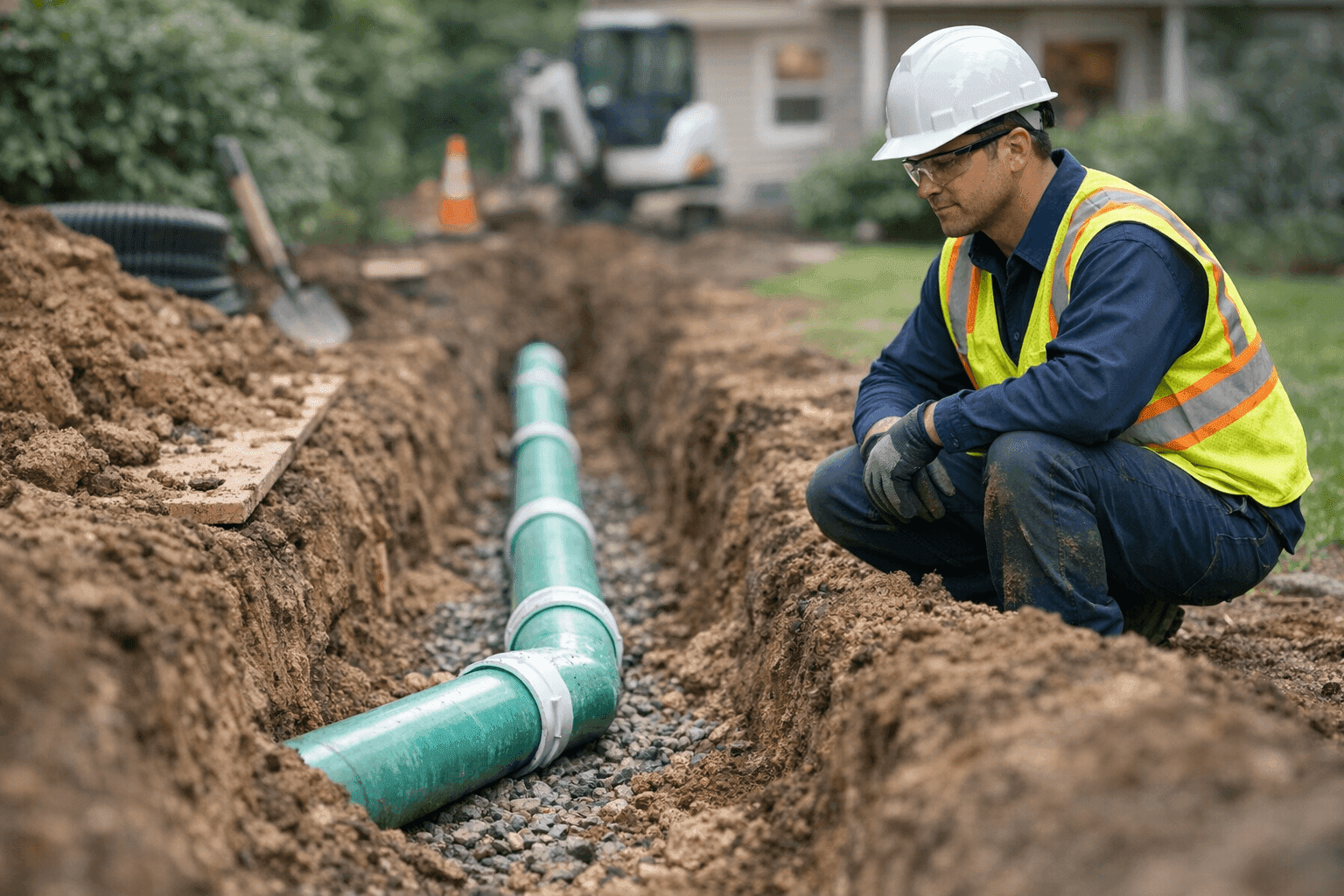
Pipe Laying: The Heart of the Process
With the trench ready, it’s time for the new sewer line. This step is all about alignment and connection.
- Laying each section of piping on a steady slope for proper flow
- Sealing joints to prevent leaks and root intrusion
- Connecting to the city main or septic tank, as required
Materials matter. PVC is common for its durability and resistance to chemicals, but some homes may require cast iron or other specialty pipes. Your installer will choose what’s best for your property.
Inspection and Testing: Double-Checking the Work 👷
No pro walks away without double-checking their work. Inspection and testing ensure your new sewer line meets code and works as it should.
- Water or air pressure tests to detect leaks
- Camera inspections (snaking a video line through the pipes)
- Municipal inspector sign-off, where required
This step gives you peace of mind—and keeps surprises from bubbling up later.
Restoring Your Property
After installation and inspection, it’s time to put everything back together.
- Filling in the trench and compacting the soil
- Repairing or replacing landscaping, walkways, or patios disturbed during the project
- Cleaning up debris so your yard feels like home again
Restoration can take a few days, especially if weather delays or special landscaping are involved. Patience here pays off in a smooth, stable lawn.
Timeline and Disruption: What to Expect
A typical sewer line installation takes 2 to 5 days, depending on the length, depth, and any surprises underground. Here’s what you might experience:
- Temporary loss of drain service during pipe connection
- Noise from excavation equipment
- Partial yard or driveway access blocked for safety
Good communication is key. At Julius La Rosa Plumbing, we keep you updated every step of the way.
Costs and Budgeting Tips
Every home is different, so costs can vary widely. Factors include:
- Pipe length and depth
- Type of soil and obstacles (roots, rocks, existing utilities)
- Material choice for your new pipe
It’s smart to budget for unexpected issues—tree roots, old pipes, or weather can add to the timeline and cost. A detailed estimate helps you plan ahead.
Common Mistakes to Avoid
Cutting corners with sewer work can lead to trouble. Typical mistakes include:
- Using the wrong pipe material for your soil
- Improper slope causing standing water or blockages
- Failing to get permits or skipping inspections
With professional service, you avoid these pitfalls and ensure a long-lasting fix.
When It’s an Emergency
Sewage flooding your home or yard is a true emergency. Stop using water fixtures and call a plumber immediately. If you’re in the area, see our local support and emergency plumbing info for Baton Rouge homeowners.
Seasonal Considerations
Weather affects sewer line projects. Freezing ground, heavy rain, or extreme heat can delay excavation and restoration. Planning ahead for dry seasons can speed up the process and protect your landscaping.
Maintenance After Installation
Protect your investment with routine care:
- Avoid flushing “flushable” wipes or grease
- Schedule periodic drain cleaning and inspections
- Watch for early warning signs like slow drains or yard puddles
For peace of mind, regular sewer line installation checkups ensure everything keeps flowing as it should.
Why Professional Standards Matter
Sewer line installation is a marathon, not a sprint. It requires careful planning, code compliance, and attention to detail. That’s why choosing a licensed, insured plumber is so important.
- Licensed plumbers guarantee work meets local codes
- Insurance protects your home from accidental damage
- Professional crews bring years of experience
Don’t gamble with your home’s health. The right team makes all the difference.
FAQ: Sewer Line Installation
How long does a typical sewer line last?
Most modern sewer lines last 50+ years, but root intrusion, soil movement, or poor materials can shorten lifespan.
Do I need to leave my home during installation?
Usually not. You may lose drain service for a few hours, but you can stay home.
How do I know if the job was done right?
Final inspection and video camera testing confirm everything meets code.
What about other plumbing issues?
If your sewer line needs work, it’s a good time to ask about related services like sewer line inspection or preventative maintenance.
Final Thoughts
Sewer line installation is a big project—but with clear steps and a trusted crew, it doesn’t have to be overwhelming. If you’ve spotted warning signs, or just want peace of mind, we’re ready to help with everything from leak repair to Garbage Disposal Repair near you.
Call Julius La Rosa Plumbing now — or reach us anytime at 855-598-5280 .