How to Prevent Plumbing Problems During Freezes
When winter rolls in, your plumbing faces a silent threat. Pipes freeze, crack, and burst—sometimes overnight. Suddenly, a cozy home turns into a wet mess. At Julius La Rosa Plumbing, we know just how quickly a cold snap can turn into a plumbing emergency.
But you don’t have to wait for disaster. With a few smart steps, you can shield your plumbing from the worst of winter. Let’s walk through what happens during freezes, how to protect your pipes, and what signs mean it’s time to act.
Why Freezes Cause Plumbing Issues ❄️
Water expands as it freezes. Think of a soda can left in the freezer—when the liquid inside turns to ice, it pushes against the can until it bursts. The same thing happens inside your pipes. When water freezes, it expands with enough force to split copper, PVC, or even steel.
Pipes in unheated spaces—like basements, attics, crawl spaces, or along exterior walls—are most vulnerable. Once a pipe cracks, thawed water rushes out, damaging floors, walls, and precious belongings. According to the International Plumbing Code, even a small split can release hundreds of gallons in a single day.
Steps to Protect Pipes
You don’t need a toolbox full of gadgets to keep your plumbing safe. Just a few basic actions can make all the difference.
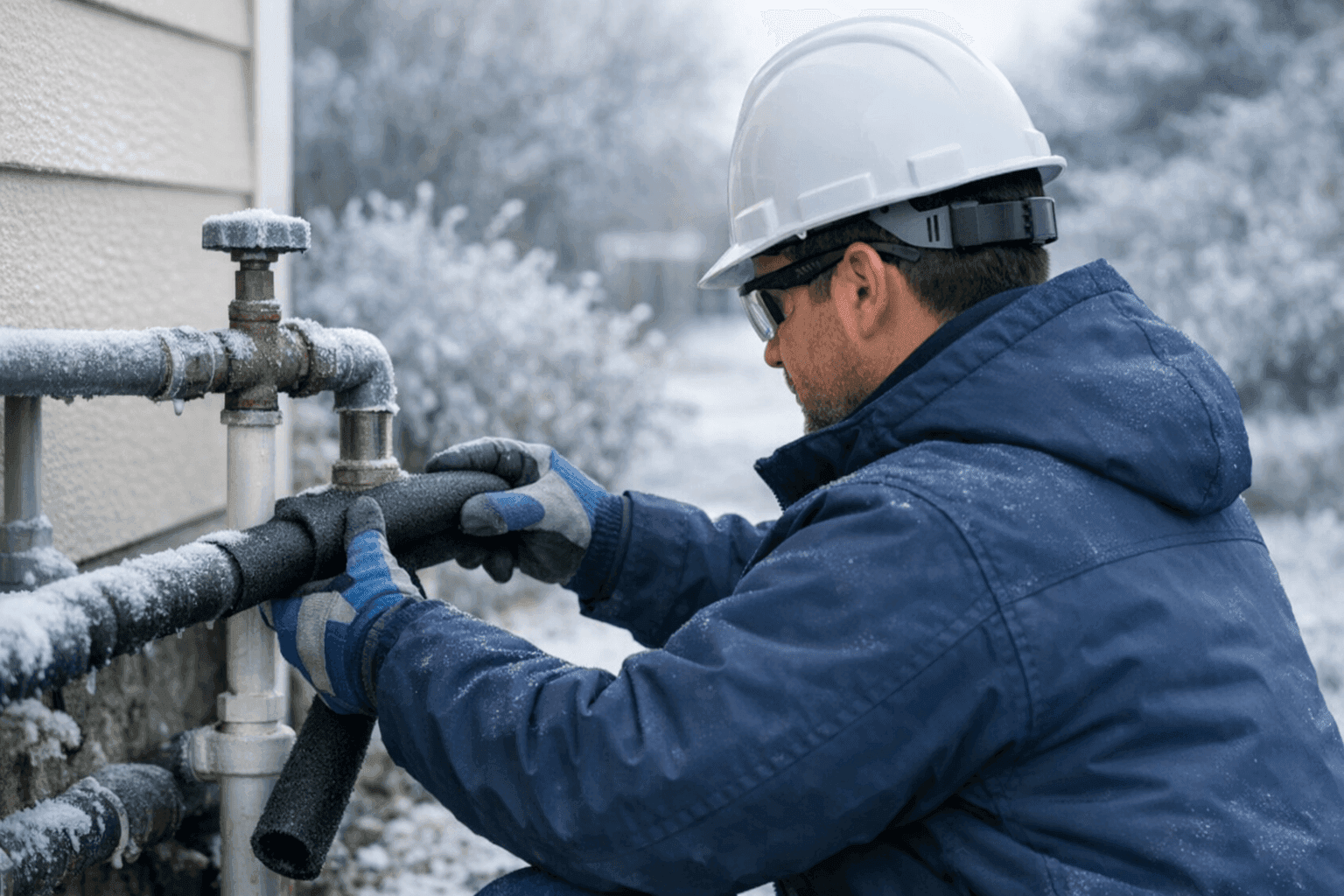
- Insulate exposed pipes: Use foam sleeves or wrap old towels around pipes in unheated areas.
- Seal gaps and cracks: Cold air sneaks in through holes near pipes. Caulk or use spray foam to close them up.
- Let faucets drip: A slow trickle keeps water moving, making it less likely to freeze.
- Open cabinet doors: Under sinks, open doors to let warm air circulate around pipes.
- Disconnect hoses: Remove garden hoses and shut off outdoor spigots.
- Keep the heat on: Even if you’re away, don’t set your thermostat below 55°F.
For homeowners who want extra peace of mind, scheduling preventative maintenance before winter is a smart investment.
Quick Safety Checklist
- Are all outdoor hoses disconnected?
- Did you insulate pipes near exterior walls?
- Are crawl space vents closed?
- Is your thermostat set above 55°F?
- Have you checked for drafts around pipes?
If you answered “no” to any of these, take action before the next freeze.
Common Mistakes That Lead to Frozen Pipes
It’s easy to overlook the little things. Here are a few missteps that catch homeowners off guard:
- Forgetting to drain sprinkler systems
- Leaving garage doors open overnight
- Turning the heat off completely during winter trips
- Ignoring small leaks or drips
Each of these can open the door to a plumbing headache.
DIY vs. Professional Help
Some freeze-prevention steps are simple. Anyone can open a cabinet or wrap a towel around a pipe. But if you notice slow drains, strange smells, or suspect a hidden leak, it’s time to call in the pros.
Attempting to thaw frozen pipes with a blowtorch or open flame is dangerous and can cause more harm than good. The National Fire Protection Association warns against using open flames near any plumbing.
Signs of Freeze Damage 🧊
Not all freeze damage is obvious. Here’s what to watch for:
- No water coming from faucets (a sign of a frozen pipe)
- Unusual sounds—like banging or whistling—when turning on taps
- Damp spots on walls or ceilings
- Water pooling in the basement or crawl space
- A sudden spike in your water bill
If you spot these warning signs, act quickly. The longer you wait, the more extensive (and expensive) the damage.
What Pros Do On Arrival
When plumbers arrive after a freeze, they:
- Locate the frozen section using thermal cameras or moisture meters.
- Thaw pipes safely with heat tape or specialized heaters.
- Inspect for cracks, splits, or leaks.
- Repair or replace damaged sections.
- Test the system for hidden leaks.
If pipe damage is confirmed, you’ll want to explore pipe repair options to restore your system’s integrity.
Timeline & Disruption: What to Expect
Plumbing repairs after a freeze can take anywhere from a couple of hours to several days, depending on the extent of the damage. Minor fixes—like thawing a pipe—are quick. But if a pipe bursts behind a wall, expect more disruption. Sometimes, drywall or flooring needs to be removed to access the problem area.
Seasonal Considerations
Winter isn’t the only time to think about your pipes. Early fall is the perfect season to prep your plumbing. Schedule maintenance before the first cold snap. This gives you time to address any issues and avoid the winter rush.
And if you’re searching for plumbing services in Washington, our team is ready to help before, during, and after winter storms.
Costs & Time Factors
Preventing frozen pipes is much cheaper than fixing them. Insulation materials and weatherproofing are affordable. Emergency repairs, on the other hand, can run into the thousands—especially if water damage spreads.
When to Call for Help 🚨
If you notice water flow slowing to a trickle, or you hear strange noises in your pipes, don’t wait. Frozen pipes can burst without warning. If you suspect a leak or spot water where it shouldn’t be, call a plumber immediately.
If you’re unsure whether you need a professional, remember: it’s always safer to get advice before a small problem becomes a flood.
Preventative Maintenance: Your Best Defense
Routine checks and seasonal prep are the best way to avoid winter plumbing disasters. Annual inspections, pipe insulation, and leak detection can save you time, money, and stress.
Our preventative maintenance services are designed to catch small problems before they turn into big ones.
FAQ: Freezes and Your Plumbing
Q: How cold does it have to get for pipes to freeze?
A: Pipes start to freeze when temperatures drop below 20°F (-6°C), but wind chill and drafts can make them freeze sooner.
Q: Should I leave my faucets dripping all night?
A: Yes, especially during the coldest nights. A slow drip keeps water moving and reduces pressure buildup.
Q: What if I’m going away for the holidays?
A: Keep the heat on, open cabinet doors, and ask a neighbor to check in if possible.
Materials and Equipment for Freeze Protection
- Foam pipe insulation (available at hardware stores)
- Heat tape (UL-listed for safety)
- Weatherstripping and caulk
- Space heaters (for use in unfinished basements—never leave unattended)
- Smart thermostats for remote monitoring
Preparing for Service
Before a plumber arrives, clear the area around suspected leaks or frozen pipes. Know where your main water shutoff valve is—it can save precious minutes in an emergency.
Final Thoughts: Protect Now, Worry Less
Freezing weather doesn’t have to spell disaster for your plumbing. With a little planning and the right support, you can keep your home safe and dry all winter long.
Call Julius La Rosa Plumbing now — or reach us anytime at 855-598-5280 .