How to Clear Slow Drains: DIY Methods That Work
Does your sink sound like it’s gargling after every use? Maybe your shower turns into a slow-motion lake. Few things frustrate homeowners more than drains that just won’t keep up. It’s not just an annoyance—slow drains can signal deeper plumbing issues if left unchecked.
At Julius La Rosa Plumbing, we know that taking the first step to tackle a slow drain can feel daunting. But with the right tools and safe, eco-friendly methods, you can often clear clogs before they become big headaches. Let’s walk through the best DIY strategies you can try today.
What Causes Slow Drains?
Before grabbing a plunger, it helps to know what you’re up against. Most slow drains are caused by:
- Hair, soap scum, and toothpaste in bathroom sinks and tubs
- Food scraps, grease, and coffee grounds in kitchen sinks
- Foreign objects (kids’ toys, dental floss, cotton swabs) sneaking past the drain cover
Over time, these materials build up, shrinking the pipe’s opening like cholesterol in an artery. Sometimes tree roots or broken pipes are the culprit—those need a pro’s help. But for routine gunk? You’ve got options.
Quick Safety Checklist
Don’t dive in without a plan. Here’s how to stay safe:
- Always wear rubber gloves.
- Never mix chemical drain cleaners with other products (toxic fumes can form).
- Boiling water can burn—pour slowly and keep kids and pets away.
- If you have a garbage disposal, always turn off the power before reaching in.
- Avoid forcing metal objects down the drain, which can damage pipes.
The Boiling Water Method: Simple but Mighty
Sometimes, the oldest tricks are the best. Boiling water melts through soap, grease, and minor blockages like a hot knife through butter.
How to do it:
- Bring a large pot of water to a rolling boil.
- Carefully pour it directly down the drain in two or three stages.
- Wait a minute between pours to let it work its magic.
When does this work?
- Ideal for kitchen sinks with greasy buildup.
- Less effective for solid blockages or hair clogs.
Safety tip: Never pour boiling water into PVC pipes—stick to metal drains to avoid warping.
Baking Soda and Vinegar: The Eco-Friendly Foam Show 🧪
Think of this as a science experiment with a purpose. Baking soda and vinegar fizz together, breaking up gunk while deodorizing your pipes.
Steps:
- Pour half a cup of baking soda into the slow drain.
- Add half a cup of white vinegar.
- Cover the drain with a plug or cloth to keep the reaction down below.
- Let it fizz for 15–30 minutes.
- Flush with hot (not boiling) water.
Why it works: The bubbling action helps loosen debris. It’s safe for most household plumbing, and you won’t be adding harsh chemicals to your wastewater.
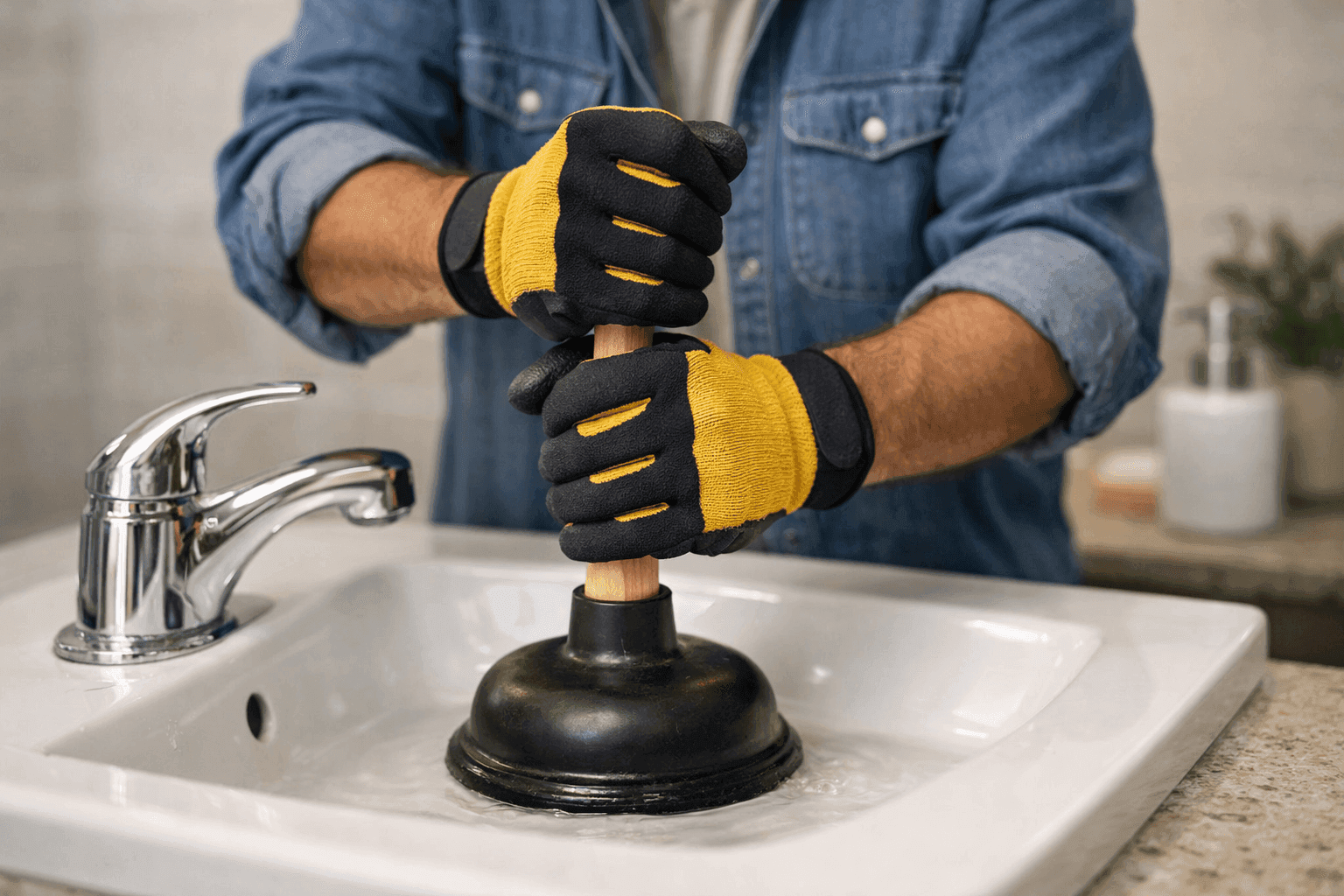
The Plunger: Not Just for Toilets 🚽
A trusty plunger works like a heart pumping blood through veins—creating pressure that can dislodge clogs.
How to plunge a slow drain:
- For sinks, fill with enough water to cover the plunger’s cup.
- Place the plunger over the drain and pump firmly up and down for 20–30 seconds.
- Check if water drains faster. Repeat if needed.
Pro tip: For double sinks, block the other drain with a wet rag to focus pressure.
Don’t use a plunger right after chemical cleaners! Splashback can be hazardous.
Drain Snake or Zip-It Tool: Getting Hands-On
When the clog is stubborn, you may need a tool. A drain snake (or a simple plastic Zip-It) acts like a plumber’s fishing rod—physically hooking or breaking up debris.
How to use:
- Insert the snake or tool into the drain.
- Gently push until you feel resistance.
- Twist and pull back to extract hair or gunk.
- Clean the tool and repeat as needed.
Best for: Bathroom sinks, tubs, and showers where hair is the main villain.
Avoid metal snakes in fragile or old pipes. For garbage disposals, specific care is needed—check your manual or our guide to garbage disposal repair.
Why Avoid Harsh Chemical Drain Cleaners?
Many store-bought cleaners can eat through pipes just as fast as they cut through clogs. Over time, repeated use may corrode plumbing, harm septic systems, and pollute local waterways (source: EPA guidelines). They’re also risky around children and pets.
Choose boiling water, baking soda, or a manual tool first—your pipes (and planet) will thank you.
When to Call an Expert Plumber
DIY can fix many slow drains, but some signs mean it’s time to call in the cavalry:
- Standing water that won’t budge
- Gurgling sounds from multiple drains
- Sewage odors
- Recurring clogs despite your best efforts
- Water backing up in odd places (like the tub when you flush)
Sometimes, a slow drain hides a bigger issue—like a break in the sewer line or a failing garbage disposal. If you’re in need of local expertise, Hampton homeowners can connect with us here.
What a Professional Plumber Will Do
When Julius La Rosa Plumbing arrives, we bring more than just tools. We start with a thorough inspection—sometimes using video cameras to peek inside pipes. We’ll check for blockages, leaks, and wear that’s invisible from above. If the issue is with your garbage disposal or deeper down the line, we have the experience and equipment to fix it safely and efficiently.
Preventing Slow Drains: Habits That Help
An ounce of prevention goes a long way. Try these simple habits:
- Use hair catchers in showers and tubs.
- Don’t pour grease, oil, or coffee grounds down the kitchen drain.
- Run cold water when using the garbage disposal.
- Flush drains monthly with hot water and a little baking soda.
- Schedule annual plumbing checkups—especially in older homes.
Common DIY Mistakes (And How to Avoid Them)
Even the well-intentioned DIYer can make a mess:
- Over-tightening pipe fittings (can crack them)
- Mixing bleach and other cleaners (dangerous fumes)
- Using makeshift tools that scratch or puncture pipes
- Ignoring slow drains—small issues can grow big, fast
If you ever feel unsure, pause and reach out to a licensed plumber.
Signs Your Drain Needs Immediate Attention
Some clogs can wait a day. Others demand a quick response:
- Water rapidly pooling or overflowing
- Multiple drains slow at once—could signal a main sewer clog
- Foul smells that won’t go away
- Unusual damp spots or water stains on floors or ceilings
In these cases, acting fast can prevent costly water damage.
How Much Time (and Mess) Should You Expect?
Most DIY drain fixes take less than an hour—if the clog is minor. The messiest part? Extracting hair or gunk. Keep a garbage bag handy. For persistent blockages, a pro may need to remove traps or even inspect pipes behind walls, which can add time and disruption.
Seasonal Considerations: Drain Care Year-Round
- Winter: Cold can cause grease to solidify faster—be extra cautious about what goes down the kitchen sink.
- Spring: Tree roots grow rapid-fire, sometimes invading outdoor sewer lines.
- Fall: Leaves and yard debris can block outdoor drains and gutters.
- Summer: Extra showers, laundry, and kitchen traffic mean more wear on your plumbing.
Tune up your habits with the seasons, and your drains will thank you.
FAQ: Quick Answers for Homeowners
Can I use these methods on any drain? Yes, but be cautious with boiling water or metal tools on older or plastic pipes.
Is it safe to try more than one method? Absolutely. Start gentle (hot water, baking soda/vinegar) before moving to plungers or snakes.
How often should I clean my drains? Monthly maintenance with hot water and gentle cleaners helps keep pipes clear.
What about my garbage disposal? If you suspect the clog is in your disposal, remember to disconnect power before investigating. See garbage disposal repair tips for safe troubleshooting.
Final Thoughts
Slow drains are like early warning lights on your plumbing dashboard. Tackle them early, and you’ll avoid most headaches. But remember: some problems need a seasoned pro. If you ever notice repeated backups, strong odors, or water pooling where it shouldn’t, don’t wait.
Call Julius La Rosa Plumbing now — or reach us anytime at 855-598-5280 .